Microneedling vs. Microneedling With PDRN: What's Different?
The short answer
The needling is the same in both: ultra-fine needles create controlled microchannels in the skin. The difference is what follows. With PDRN, polydeoxyribonucleotide, a compound derived from salmon DNA, is applied to the skin after the needling. Microneedling is $225 for the face; with PDRN it is $350. The days after are the same as plain microneedling, and so is the aftercare.
Two lines on our menu look almost the same. Microneedling, $225 for the face. Microneedling with PDRN, which we also call salmon DNA therapy, $350 for the face. Same room, same needling, a hundred and twenty-five dollars apart. The question we get, reasonably, is what the difference actually buys.
The short answer is one ingredient and one extra step. The longer answer is worth having, because the name salmon DNA raises more eyebrows than it should, and because the honest way to choose between the two is not a blog post. It is a look at your skin, in person, which costs nothing here.
So here is what each treatment is, what the visit and the days after look like, and how we think about which one to recommend.
What is microneedling, exactly?
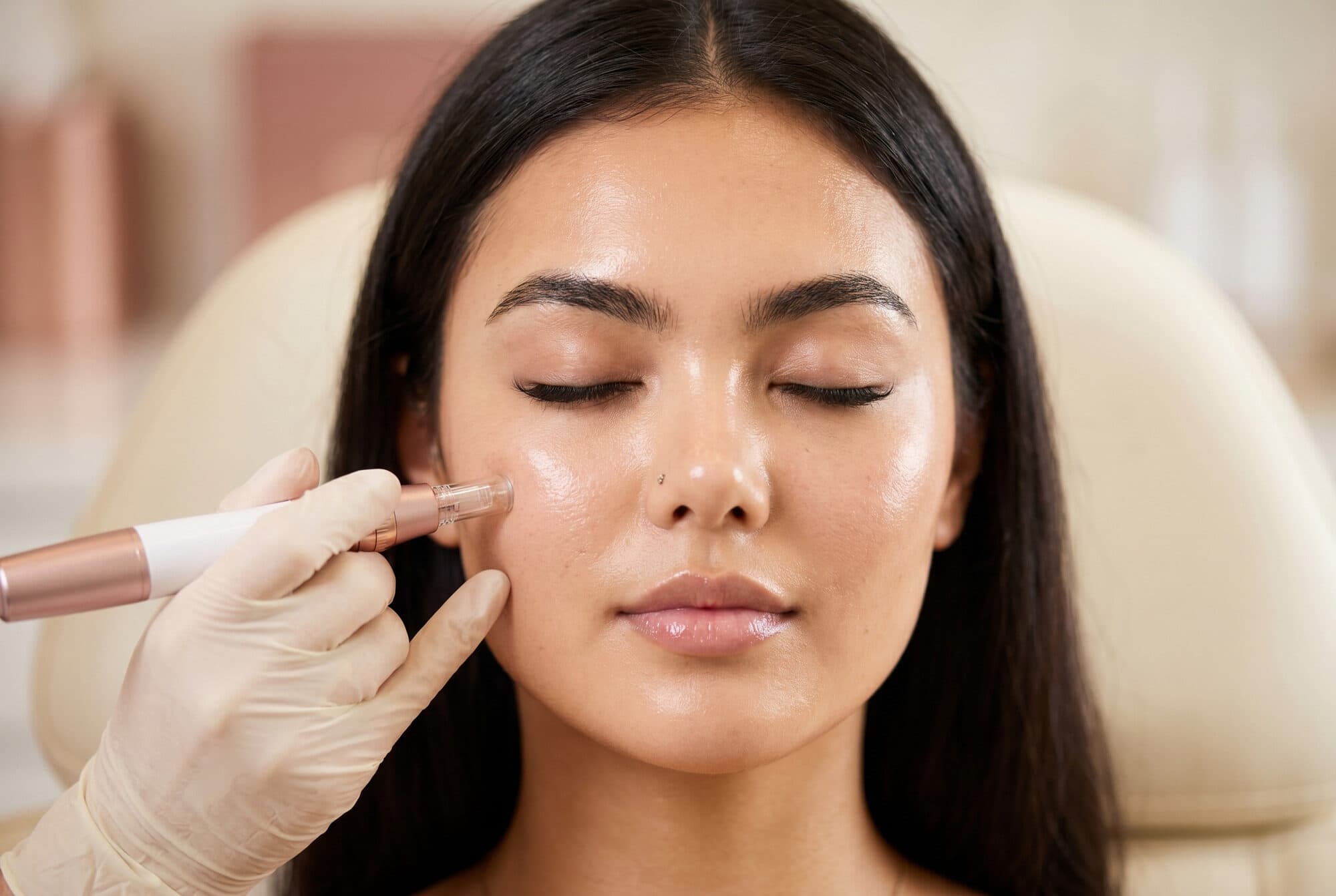
Microneedling is sometimes called collagen induction therapy, and the mechanism is as simple as the name suggests. A pen with a cartridge of ultra-fine needles passes over the skin, creating controlled microchannels, and the skin's own healing response follows. Nothing is injected. The needles open channels; the skin does the rest.
On our menu it is priced by area. The face is $225, the neck or the décolletage can be added for $50 each, and a series of three starts from $600. For the fullest results we recommend a series of three, and the American Academy of Dermatology likewise describes more than one session as typical for the results people want.
What is PDRN, and where does salmon DNA come in?
PDRN stands for polydeoxyribonucleotide. It is a compound derived from salmon DNA, which is where the treatment's nickname comes from, and it arrives at the treatment room as a skin-care formulation rather than as anything that swims. That is the whole of the fish connection.
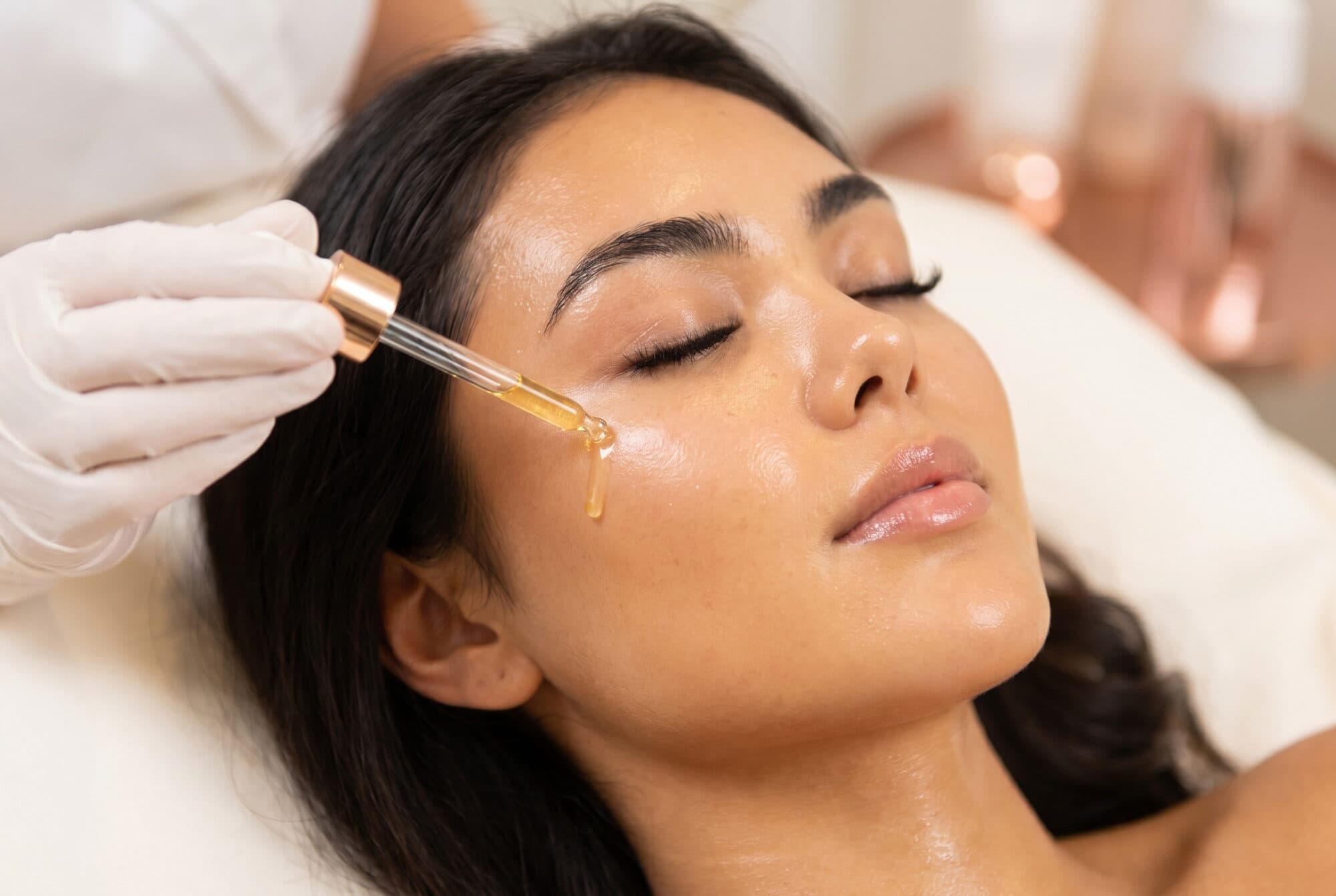
In a PDRN visit, the needling happens as it does in plain microneedling. A PDRN-based formulation is then applied to the skin as part of the treatment. That is the extra step, and it is the whole of the difference in the room: the same needling, plus the PDRN.
What PDRN is expected to do for your particular skin is the part we keep for the consultation. It is a real question with a real answer, and the answer depends on what your skin is doing and what you want from it, which is not something we can read from here.
What are the days after like, and are they different?
The needling is the same in both, so the days after it are too. Right afterwards the skin is typically flushed and can feel like a mild sunburn; the American Academy of Dermatology describes those reactions as usually disappearing in a few days to a week, and advises waiting twenty-four hours before makeup goes back on. Adding PDRN does not change that: recovery is similar to plain microneedling, and the aftercare is the same.
That is the honest size of it: a few quiet days rather than time off. Most people plan a visit for the start of a calm stretch, so the flushed days fall somewhere nobody is looking closely. We will tell you what to plan for before anything is booked, and if your calendar says this week is wrong for it, we will say so.
How do the two compare, side by side?
Here is the whole comparison in one place. Every price is from our menu, and both treatments are priced by area, with the neck and décolletage as add-ons.
| Aspect | Microneedling | Microneedling with PDRN |
|---|---|---|
| The needling | Ultra-fine needles create controlled microchannels | The same |
| What is added | Nothing | PDRN, applied after the needling |
| Face | $225 | $350 |
| Neck add-on | $50 | $125 |
| Décolletage add-on | $50 | $125 |
| Series of three | From $600 | From $1,000 |
| The days after | Typically flushed, a mild sunburn feel, a few days to a week | The same as plain microneedling |
| How many visits | We recommend a series of three | We recommend a series of three |
Which one should you choose?
We would rather look than guess. The consultation is free, it is a real appointment with our nurse practitioner, our registered nurse or one of our licensed aestheticians, depending on the treatment, and it ends with a recommendation you can take home and think about. Sometimes that recommendation is plain microneedling. Sometimes it is the PDRN version. Sometimes it is neither, and we will say that too, because sending you into a series you do not need is not a plan we want our name on.
If you already know you want a series, the consultation is also where the calendar gets built: three visits, spaced over weeks, placed where the flushed days are easy to give. Bring your calendar and your questions. We will bring the honest read.
Questions
Frequently asked questions
Is PDRN really made from salmon DNA?
Yes. PDRN stands for polydeoxyribonucleotide, and the compound is derived from salmon DNA, which is why microneedling with PDRN is often called salmon DNA therapy. In this treatment it is applied to the skin after the needling.
Does adding PDRN change the downtime?
The needling is the same in both treatments, so plan for the same window for it: the skin is typically flushed and can feel like a mild sunburn, with those reactions usually disappearing in a few days to a week, and we advise waiting twenty-four hours before makeup goes back on. Adding PDRN does not change the aftercare; it is the same as for plain microneedling.
How much does microneedling with PDRN cost?
On our menu, microneedling with PDRN is $350 for the face, with the neck or décolletage as a $125 add-on each, and a series of three from $1,000. Plain microneedling is $225 for the face, $50 per add-on area, and a series of three from $600. Every price comes from our published menu.
How many sessions do I need?
For the fullest results we recommend a series of three, for both microneedling and microneedling with PDRN. The American Academy of Dermatology likewise describes more than one session as typical for the results people want. How the three are spaced is worked out at the consultation, around your calendar.
Is PDRN an injection or a filler?
Neither. In this treatment the PDRN is applied to the skin after the needling, not injected, and it is not a filler: it is a compound derived from salmon DNA, not a volume-adding gel. If volume is the question, that is a different conversation and a different page.
Can I decide between them at the consultation?
Yes, and we would prefer it. The consultation is free, with no obligation to book anything, and it is where we look at your skin in person and say which of the two we would recommend, or whether something else on the menu fits better. Come for the consultation, decide on treatment after. You don't have to book one on the spot.
Sources
- American Academy of Dermatology, Microneedling can fade scars, uneven skin tone, and more. aad.org/public/cosmetic/scars-stretch-marks/microneedling-fade-scars (opens in a new tab) · Retrieved August 16, 2026
General information, not medical advice — for your own skin and your own plans, that is what a consultation is for. Our Terms of Service put it in full.
Want more of these in your Google results? Add éclat as a preferred source (opens in a new tab).