BBL or HALO: Which One Do You Actually Need?
The short answer
They are the two halves of our light and laser menu. BBL is BroadBand Light, a wide band filtered down to the range being treated; HALO is the hybrid fractional laser we resurface with. The honest difference when choosing is the week after: a few hours of redness for one, a five-day arc for the other.
Two names carry most of the questions we hear about skin treatments, and they arrive together so often that they sound like rivals: BBL and HALO. Both are Sciton platforms, both live on our menu, and both leave people wondering which one they were supposed to be asking for.
Here is the honest starting point: they are not two strengths of the same thing. They are different instruments built for different jobs, and the practical difference, the one that actually decides schedules, is what the week after looks like.
This guide lays out what each platform is, what recovery asks of you, and how we help people choose between them. Read it as guidance rather than a prescription: the real decision happens at a consultation, looking at your actual skin, and ours is free.
What is BBL, and what is HALO?
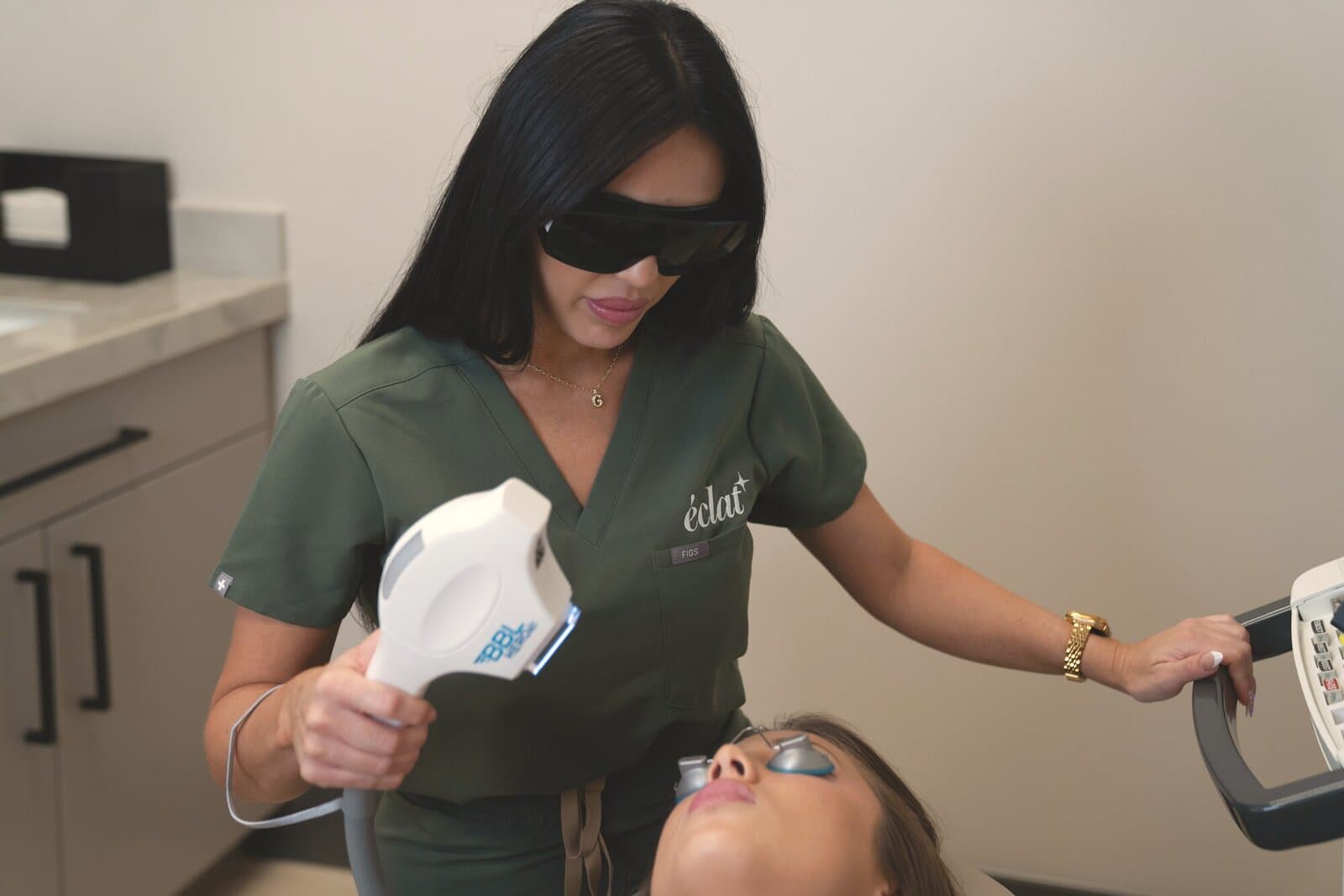
BBL® HEROic™ is BroadBand Light: a wide band of wavelengths, filtered down to the range being treated. Our photofacial, our acne treatment and our hair reduction all run on this one platform with different filters doing different work. Expect some redness that typically settles within a few hours, and pigmented spots that darken first, then fade and flake away over the following days.
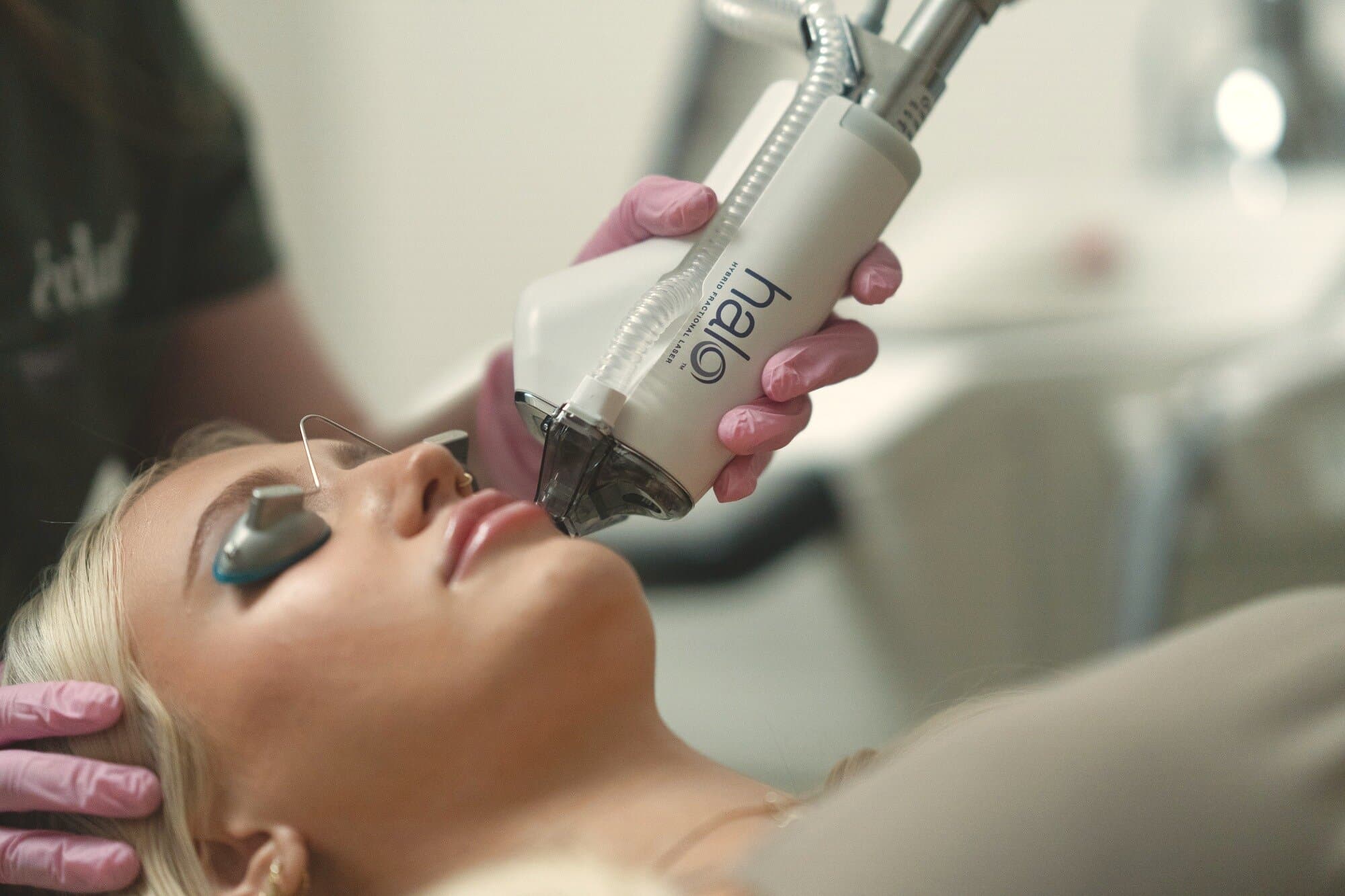
HALO® is the laser: a hybrid fractional laser that delivers an ablative and a non-ablative wavelength into the same microscopic treatment zone. It is the resurfacing side of our menu, and the deepest work we do.
Our menu lists them together as BBL & HALO, and the pairing is the point: neither is a stronger version of the other, and nobody graduates from one to the other. One is filtered light with jobs across pigment and hair. One resurfaces. Different instruments, different weeks after.
What does the week after actually look like?
This is the section worth reading twice, because it is where the two genuinely part ways.
After BBL, the redness typically settles within a few hours, and the darkened spots flake away over the following days. Sun spots become briefly more visible before they fade, which is worth knowing before a big week. We ask that treated skin stay out of direct sun for fourteen days afterwards, and that extended sun exposure be avoided beforehand too, since a tan changes what the light is aimed at.
HALO asks for more. Plan around a five-day healing arc: warmth for the first hour or two; swelling that may last two to four days, usually worst the first morning; redness that peaks around day three; then a bronzed, sandpaper texture that flakes and peels off. Makeup goes back on once that peeling is finished, and daily sunscreen stays on for up to three months afterwards.
Healing varies with the depth of the treatment and with the person, so five days is not the number to plan to. A month is, and six to eight weeks if there will be close photographs.
How do you choose?
Start with the mirror, not the menu. If what you keep noticing is sun spots, that conversation usually leads to BBL, whose whole rhythm after a visit is pigment darkening, lifting and flaking away. If it is texture you keep noticing, the surface itself, that is a resurfacing question, and resurfacing is HALO's entire job. And if you are not sure which question you are asking, that is exactly what a consultation is for, and it costs nothing.
Then be honest about the calendar. The week after is the real difference between these two, so the practical choice is often less about the mirror and more about what the next month can actually hold: travel, sun, photographs, deadlines.
| Aspect | BBL | HALO |
|---|---|---|
| What it is | BroadBand Light: a wide band, filtered down to the range being treated | A hybrid fractional laser: the resurfacing side of the menu |
| The week after | Redness settles in hours; spots darken, then flake away over days | A five-day arc: swelling, redness peaking day three, then flaking |
| Sun rules | Fourteen days out of direct sun after; no extended sun beforehand | Daily sunscreen for up to three months afterwards |
| Plan around | Two quiet weeks, easiest to give in the cooler months | A month of room; six to eight weeks before close photographs |
Can you do both?
Yes, and many plans eventually do, because the platforms answer different questions and the mirror rarely asks only one. They are not steps on a ladder, so this is never about working your way up. What order and what spacing would suit you is a consultation conversation, and we deliberately do not answer it in an article, because the honest answer depends on the skin in front of us.
The calendar helps here more than people expect. Phoenix's cooler months, roughly October through April, are when treatments built on light fit most easily into real life: two quiet weeks out of direct sun and a five-day healing arc are far easier promises in November than in July. If both platforms belong in your year, that stretch is where the room is.
Questions
Frequently asked questions
Is HALO just a stronger version of BBL?
No. They are different instruments: one delivers filtered BroadBand Light, with our photofacial, acne and hair-reduction treatments running on its filters; the other resurfaces, delivering an ablative and a non-ablative wavelength into the same microscopic zone. Strength is the wrong axis. The right questions are what you want changed, and what the week after can hold.
How long is the downtime after HALO?
Expect three to five days of visible downtime: swelling for two to four days, redness peaking around day three, then a bronzed, sandpaper texture that flakes and peels away. Makeup goes back on once peeling is done. Plan a month before an event, not a week.
Can I get BBL in the Phoenix summer?
It is done here year-round, but the sun is the scheduling problem, not the heat. We ask that treated skin stay out of direct sun for fourteen days afterwards, and that extended sun exposure be avoided beforehand. If a pool weekend or a hiking trip sits close to the appointment, say so.
Which one helps with sun spots?
Sun-spot conversations usually lead to BBL. Its rhythm after a visit is exactly that: pigmented spots darken first, then fade and flake away over the following days, becoming briefly more visible before they fade. Whether it is the right fit for your skin is a consultation question, and ours is free.
Can BBL and HALO happen in the same plan?
That is a consultation decision, not an article's. Some plans pair the platforms across a season rather than a day, and Phoenix's cooler months leave the most room for both sets of sun instructions. Bring the calendar you actually have, and we will build the order around it.
Do I need a consultation before either one?
Yes, and it costs nothing. These are medical devices and your skin is particular, so an unhurried look at it decides better than any comparison article can. No pressure is the house rule: you leave with a plan, not an obligation. Come for the consultation, decide on treatment after. You don't have to book one on the spot.
Sources
- Sciton, BBL Patient Pre & Post-Care Instructions (2600-023-12 Rev A). sciton.com/postCareFlyers/2600-023-12_BBL_Patient_PostCare.pdf (opens in a new tab) · Retrieved August 14, 2026
- Sciton, BBL® HEROic™ treatment page. sciton.com/treatment/bbl-heroic/ (opens in a new tab) · Retrieved August 14, 2026
- Sciton, HALO Patient Pre & Post-Care Instructions — 5 Days to Glowing Skin (2600-023-10 Rev A). sciton.com/postCareFlyers/Halo_Patient_PostCare.pdf (opens in a new tab) · Retrieved August 14, 2026
- Sciton, HALO® treatment page. sciton.com/treatment/halo-laser-treatments/ (opens in a new tab) · Retrieved August 14, 2026
General information, not medical advice — for your own skin and your own plans, that is what a consultation is for. Our Terms of Service put it in full.
Written for readers near Paradise Valley and Scottsdale: directions and drive times from Paradise Valley and Scottsdale.
Want more of these in your Google results? Add éclat as a preferred source (opens in a new tab).