BBL or HALO for Sun-Lived Skin? A Cave Creek Guide
The short answer
Both answer questions the desert sun writes on skin, and the honest difference is the week after. BBL is BroadBand Light, with redness that typically settles in hours; HALO is the laser we resurface with, and it asks for a five-day arc. An outdoor calendar, not the mirror alone, usually decides.
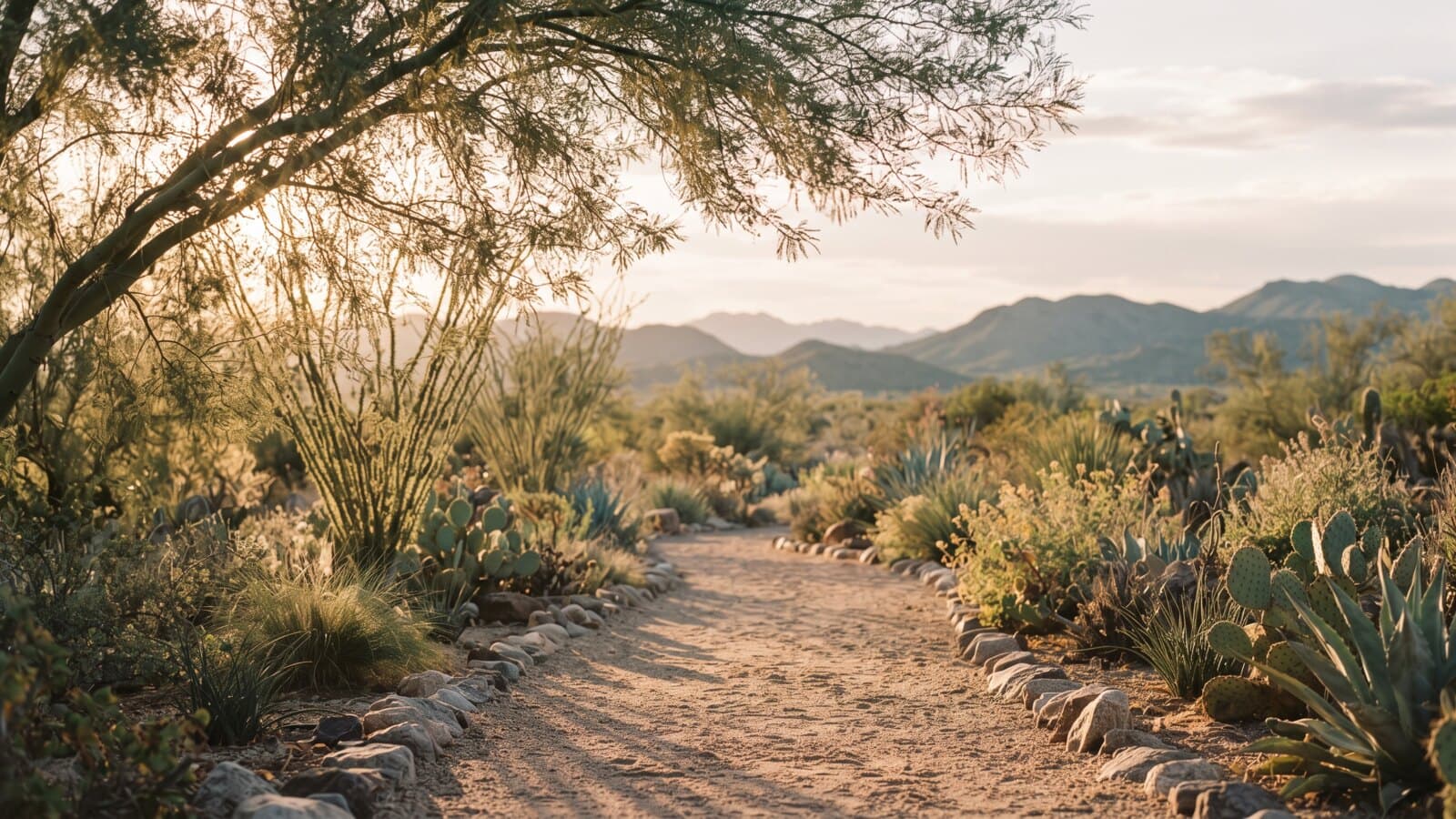
Cave Creek and Carefree get the desert at full strength, and mostly on purpose: mornings on the trail or the golf course, afternoons in a garden that would not survive anywhere else, evenings outside because that is the whole point of living up there. The sun is the amenity. It is also, over enough years, the thing people eventually ask us about, because desert light keeps a ledger on skin.
When that conversation starts, two names come up so often they sound like rivals: BBL and HALO. Both are Sciton platforms, both live on our menu, and both leave people wondering which one they were supposed to be asking for. They are not two strengths of the same thing. They are different instruments built for different jobs.
This guide is the comparison rewritten for a genuinely outdoor life, because up in Cave Creek the deciding question is rarely which platform sounds better. It is what the weeks after ask of a calendar built around being outside, and when the desert year actually has room for that. We are éclat Spa & Wellness, in North Phoenix, an easy drive down Cave Creek Road, and our consultation for all of this is free.
What is BBL, and what is HALO?
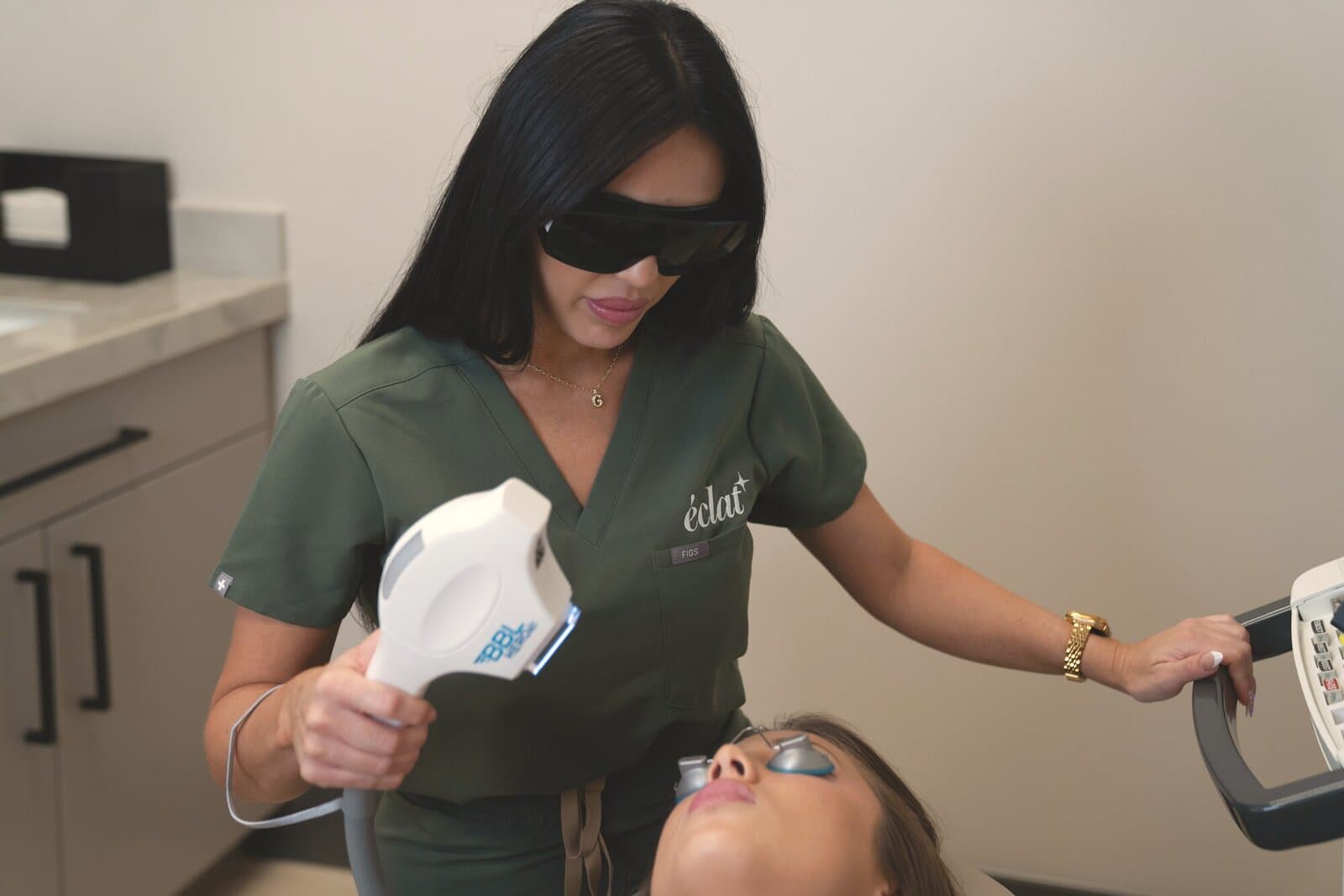
BBL® HEROic™ is BroadBand Light: a wide band of wavelengths, filtered down to the range being treated. Our photofacial, our acne treatment and our hair reduction all run on this one platform with different filters doing different work. Expect some redness that typically settles within a few hours, and pigmented spots that darken first, then fade and flake away over the following days.
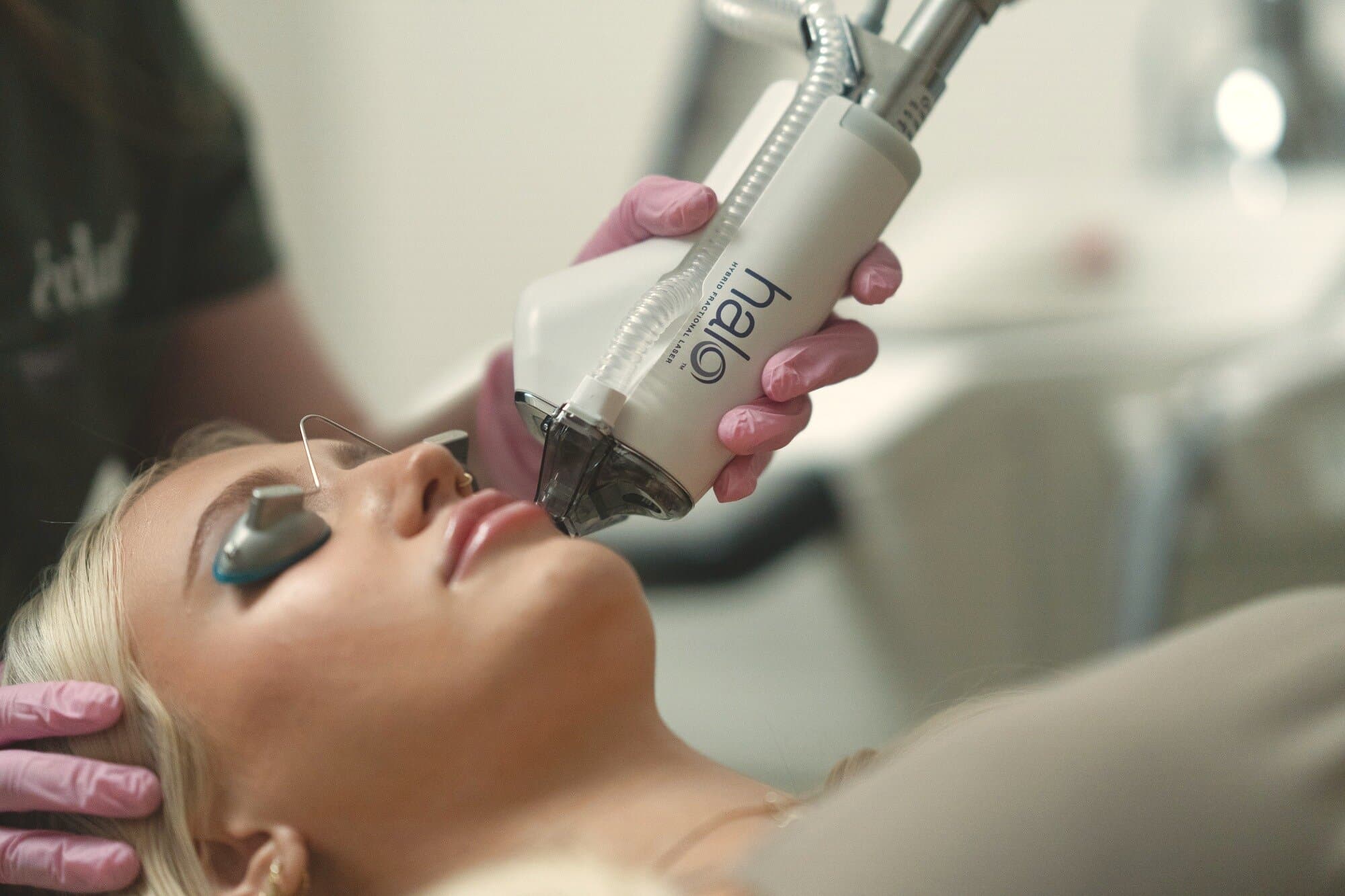
HALO® is the laser: a hybrid fractional laser that delivers an ablative and a non-ablative wavelength into the same microscopic treatment zone. It is the resurfacing side of our menu, and the deepest work we do.
Neither is a stronger version of the other, and nobody graduates from one to the other. One is filtered light with jobs across pigment and hair. One resurfaces. Different instruments, different weeks after, and for an outdoor life the weeks after are where the real decision lives.
Which question is your mirror actually asking?
Start with the mirror, not the menu. If what you keep noticing is sun spots, the flecks that photograph darker than they look, that conversation usually leads to BBL, whose whole rhythm after a visit is pigment darkening, lifting and flaking away. Sun spots become briefly more visible before they fade, which is worth knowing before a week full of plans.
If it is texture you keep noticing, the surface itself rather than the spots on it, that is a resurfacing question, and resurfacing is HALO's entire job. What HALO would honestly involve for your skin is a consultation conversation, because the answer depends on the skin in front of us, not on an article.
And if you are not sure which question you are asking, which is most people, that is exactly what a consultation is for. Ours is free, and no pressure is the house rule: you leave with a plan, not an obligation. Come for the consultation, decide on treatment after. You don't have to book one on the spot.
One reframe that helps almost everyone who lives up there: this is not about undoing the outdoor life, and nobody at a consultation with us will suggest you trade the trail for a treatment. The desert years are the point of living where you live. The conversation is simply about what you would like the mirror to show for them, and which instrument, if any, matches that answer. Some consultations end with a plan for October. Some end with sunscreen advice and a see-you-when-you-are-ready. Both are good visits.
What does the week after ask of an outdoor life?
Here is where the two genuinely part ways, and where a Cave Creek calendar has to be honest with itself.
After BBL, the redness typically settles within a few hours, and the darkened spots flake away over the following days. The real instruction is about the sun: we ask that treated skin stay out of direct sun for fourteen days afterwards, and that extended sun exposure be avoided beforehand too, since a tan changes what the light is aimed at. Read that against an outdoor life and it means fourteen days of early tee times, shade, a genuinely wide brim, and letting the garden wait for evening.
HALO asks for more. Plan around a five-day healing arc: warmth for the first hour or two; swelling that may last two to four days, usually worst the first morning; redness that peaks around day three; then a bronzed, sandpaper texture that flakes and peels off. Makeup goes back on once that peeling is finished, and daily sunscreen stays on for up to three months afterwards. For someone outside every day, that sunscreen line is the one to take seriously, because it is the instruction that outlives the visible healing.
Healing varies with the depth of the treatment and with the person, so five days is not the number to plan to. A month is, and six to eight weeks if there will be close photographs.
| Aspect | BBL | HALO |
|---|---|---|
| What it is | BroadBand Light: a wide band, filtered down to the range being treated | A hybrid fractional laser: the resurfacing side of the menu |
| The week after | Redness settles in hours; spots darken, then flake away over days | A five-day arc: swelling, redness peaking day three, then flaking |
| The sun rules | Fourteen days out of direct sun after; no extended sun beforehand | Daily sunscreen for up to three months afterwards |
| What the outdoor calendar gives up | Two weeks of midday trail, pool and fairway sun | A month of room; the sunscreen habit stays for a season |
When does the desert year actually have room for this?
Phoenix's cooler months, roughly October through April, are when treatments built on light fit most easily into real life, and that goes double north of the 101. Two quiet weeks out of direct sun and a five-day healing arc are far easier promises in November than in July, when even the shade is negotiable.
The pleasant surprise for Cave Creek and Carefree readers is that the best season for these treatments is also the season the high desert is at its best. The fourteen days after a BBL appointment do not ask you to stay indoors. They ask you to stay out of direct sun, which in a Carefree December is what the patio, the ramada and the early morning already are.
The planning we do at a consultation is mostly this: laying your actual outdoor calendar, the member-guest, the season's hikes, the trip, against what each treatment honestly asks, and finding the stretch where the two fit. If both platforms belong in your year, the October-through-April window is where the room is, and plans that pair them usually pair them across a season rather than a day. What order and what spacing would suit you is a consultation conversation, deliberately not an article's.
Roughly, here is how the high-desert year maps. Read it as a planning aid, not a rulebook: the sun instructions are the fixed part, and your calendar is the part we plan around.
| Stretch of the year | What it offers | What to plan around |
|---|---|---|
| October and November | The season opens: low sun, cool mornings, easy shade | Book early; the whole Valley has the same idea |
| December through February | The easiest fourteen-days-out-of-direct-sun of the year | Holiday photographs, if the plan includes HALO's arc |
| March and April | Still kind, still workable | Spring travel and the last of trail season crowding the calendar |
| May through September | Possible, with discipline | The sun is the scheduling problem, not the heat: shade and timing carry the whole plan |
What do these treatments cost?
BBL photofacials start at $550 on our published menu. HALO is priced at consultation: the treatment is planned to your skin first, and the number follows the plan rather than preceding it, given in writing before anything is booked.
Worth knowing for the outdoor reader specifically: the same BBL platform also runs our hair reduction, from $75 per area, which comes up often with people who live in the sun and are tired of the maintenance that goes with it. Different filter, same machine, same fourteen-day sun instruction to plan around.
And the consultation that sorts all of this out, which platform, which season, what total, is free, with no obligation. For a decision with this much calendar in it, that is the right first appointment by a wide margin.
How far is the drive from Cave Creek or Carefree?
We are in North Phoenix, on North Tatum Boulevard: from Cave Creek the drive runs a straight twenty to thirty minutes south, down Cave Creek Road onto Tatum, with the mountains in the mirror the whole way. From Carefree it is much the same story, down Tom Darlington to Scottsdale Road or across to Cave Creek Road, whichever side of town you start from. No freeway, no downtown.
We hear the same worry from up north in two forms: that everything worth doing is down in Scottsdale, or that anything this close to home must be a franchise. Neither, as it happens. We are an independent med spa on named Sciton platforms, our whole menu is published, and the drive down Cave Creek Road is shorter than most of the trails you already give a morning to.
For treatments like these, that distance matters less than it would for a weekly errand. The drive you would actually repeat is the free consultation, and it is the most useful half hour in this whole article: an unhurried look at your actual skin, a plan priced in writing, with no obligation attached.
BBL photofacials on our menu start at $550, and HALO is priced at consultation, because it is planned to your skin first.
One practical pairing for the drive: if the calendar above put a month in your head, book the consultation a few weeks before it rather than in it. The cooler months are when the whole Valley wants the same appointments, and the consultation is the part with no sun instructions attached, so it fits any month, including the ones too bright for anything else. Arrive with your season's plans, leave with the plan that fits between them.
Questions
Frequently asked questions
Can I golf or hike after a BBL appointment?
The instruction to plan around is sun, not exertion: we ask that treated skin stay out of direct sun for fourteen days afterwards, and that extended sun exposure be avoided beforehand too. Early tee times, shade and a wide brim are how outdoor lives usually thread it. Bring your actual calendar to the consultation and we will plan around it.
Is HALO a bad idea for someone outside every day?
It is a scheduling question, not a disqualification. HALO asks for a five-day healing arc, a month of room before events, and daily sunscreen for up to three months afterwards, which is the instruction that matters most for an outdoor life. The cooler months make all of that far easier, and the fit for your skin is a consultation conversation.
Which one helps with sun spots?
Sun-spot conversations usually lead to BBL. Its rhythm after a visit is exactly that: pigmented spots darken first, then fade and flake away over the following days, becoming briefly more visible before they fade. Whether it is the right fit for your skin is a consultation question, and ours is free.
When is the best time of year for light treatments near Cave Creek?
Phoenix's cooler months, roughly October through April. Two quiet weeks out of direct sun after BBL and a five-day HALO healing arc are far easier promises in November than in July, and the high desert's best season conveniently overlaps the treatments' best season. Summer is possible; the sun is the scheduling problem, not the heat.
Does éclat serve Cave Creek and Carefree?
Yes. We are in North Phoenix on North Tatum Boulevard, a straight twenty to thirty minute drive down Cave Creek Road or Tom Darlington from either town. Consultations are free, walk-ins are welcome and appointments are preferred. Every price is on our published menu before you come in, except HALO, which is priced at your consultation because each plan is different.
What does BBL cost at éclat?
BBL photofacials start at $550 on our published menu, hair reduction on the same platform runs from $75 per area, and HALO is priced at consultation because it is planned to your skin first. Your own estimated total is put in writing at a free consultation before anything is booked.
Is HALO just a stronger version of BBL?
No. They are different instruments: one delivers filtered BroadBand Light, with our photofacial, acne and hair-reduction treatments running on its filters; the other resurfaces, delivering an ablative and a non-ablative wavelength into the same microscopic zone. Strength is the wrong axis. The right questions are what you want changed, and what your calendar can hold.
Sources
- Sciton, BBL Patient Pre & Post-Care Instructions (2600-023-12 Rev A). sciton.com/postCareFlyers/2600-023-12_BBL_Patient_PostCare.pdf (opens in a new tab) · Retrieved August 14, 2026
- Sciton, BBL® HEROic™ treatment page. sciton.com/treatment/bbl-heroic/ (opens in a new tab) · Retrieved August 14, 2026
- Sciton, HALO Patient Pre & Post-Care Instructions — 5 Days to Glowing Skin (2600-023-10 Rev A). sciton.com/postCareFlyers/Halo_Patient_PostCare.pdf (opens in a new tab) · Retrieved August 14, 2026
- Sciton, HALO® treatment page. sciton.com/treatment/halo-laser-treatments/ (opens in a new tab) · Retrieved August 14, 2026
General information, not medical advice — for your own skin and your own plans, that is what a consultation is for. Our Terms of Service put it in full.
Want more of these in your Google results? Add éclat as a preferred source (opens in a new tab).