Facial or Peel: Which One Does Your Skin Actually Need?
The short answer
A facial is care: cleansing, exfoliation, hydration and massage, with no shedding phase to wait out. A peel is change: once peeling starts, around day three, it runs its course for several days. Choose by what you want changed, and by what the next two weeks can absorb.
Both sit on the same page of our menu, and the words get used almost interchangeably: a facial, a peel, something for my skin. So the question arrives at the front desk constantly, often right at the moment of booking. Which one do I actually need?
The honest answer is that they are two different kinds of visit. A facial is care: it tends to the skin you have today. A peel is change, and the change arrives with a peeling window that deserves respect. Neither is better. They are for different moments, different goals and, just as often, different calendars.
Here is what each one involves, how we help people choose, and the case where the honest answer is neither. Read it as guidance rather than a prescription: the real decision happens at a consultation, looking at your actual skin, and ours is free.
What does a facial actually do?
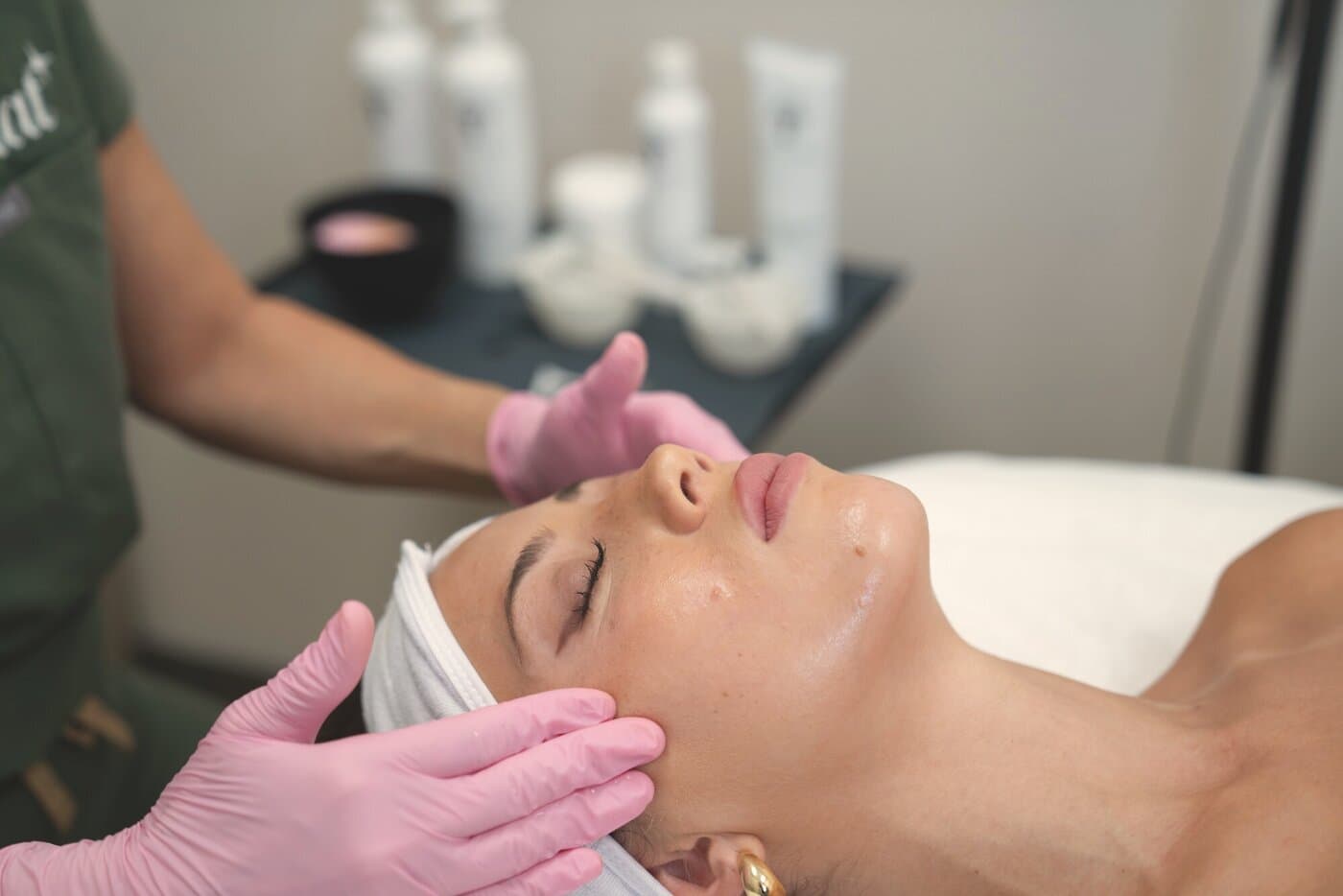
A facial is cleansing, exfoliation, extractions where they are needed, a mask, hydration, and massage, with no shedding phase to wait out. That last part matters more than it sounds: it is why a facial sits well in the last week before an event, where a peel does not.
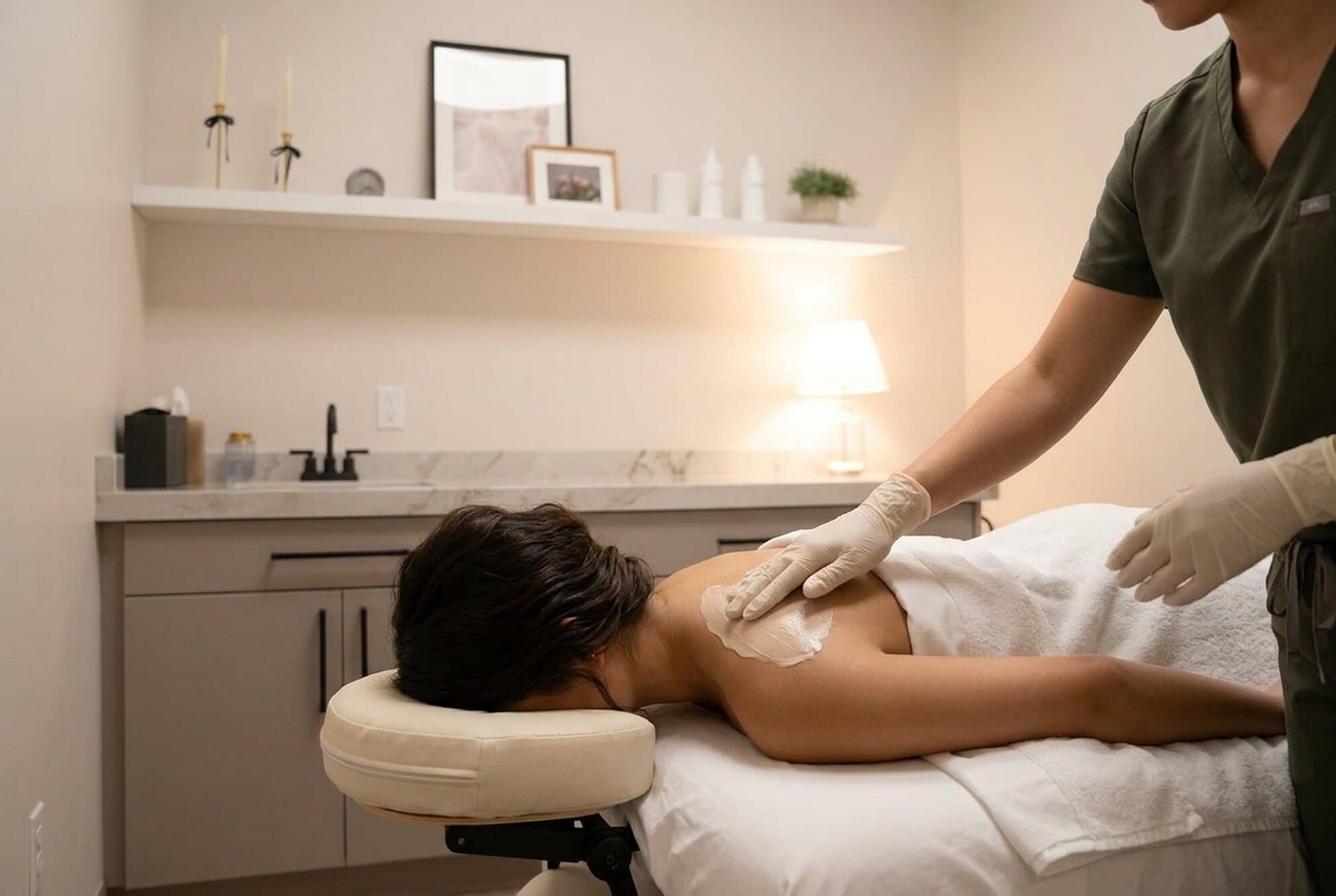
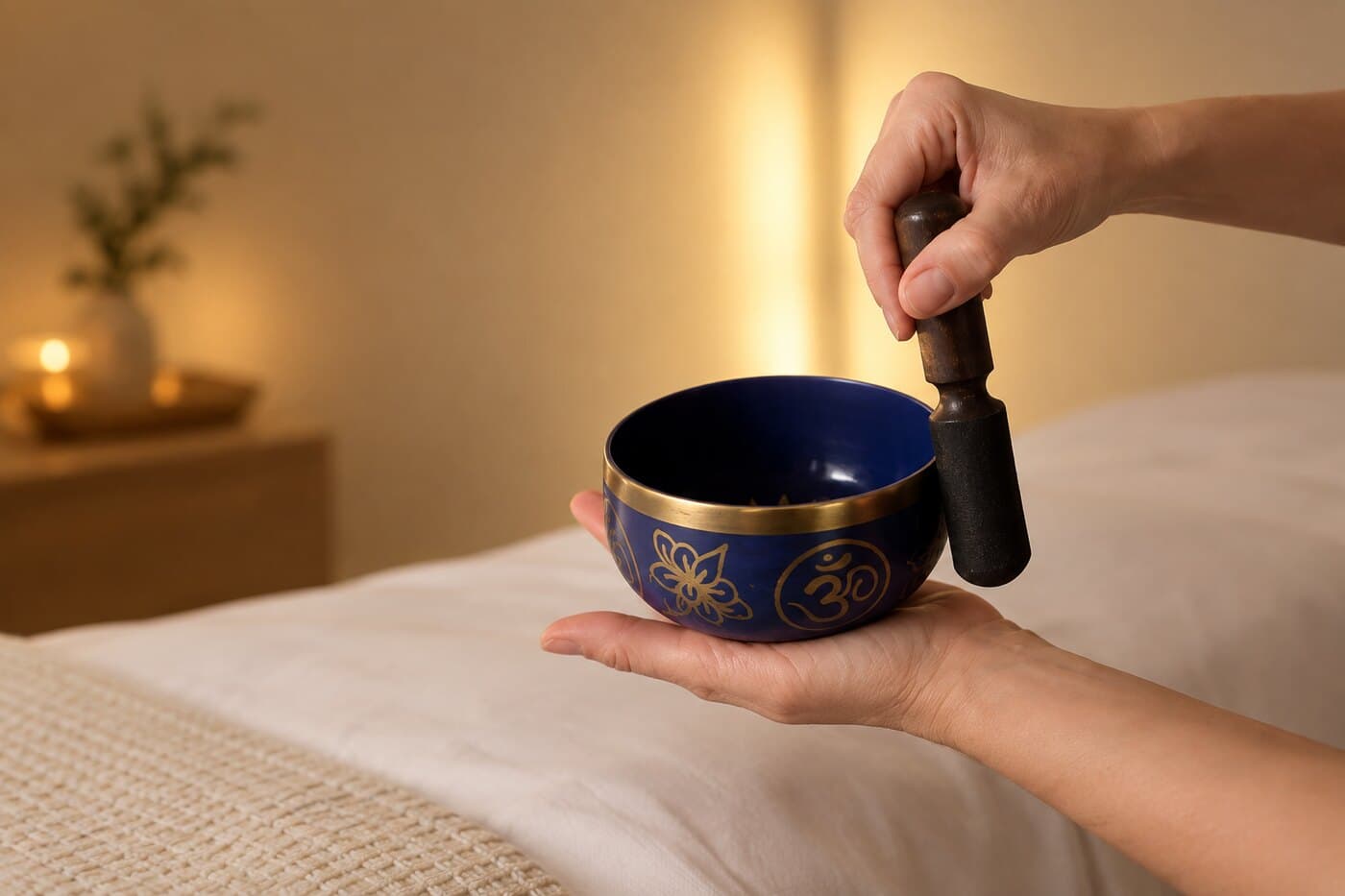
On our menu that care takes a few forms. The Signature facial is the customized core: cleanse, exfoliation and hydration, with lymphatic drainage and massage. The Savasana is the Signature with sound healing added, for a deeper kind of rest. And the back facial brings the same care to the skin you cannot reach yourself: cleansing, gentle extractions where needed, a customized mask and deep hydration.
What a facial is not is a lesser peel. It is not a waiting room for something stronger. Plenty of skin wants exactly this, regularly, and nothing else.
Does a peel really peel?
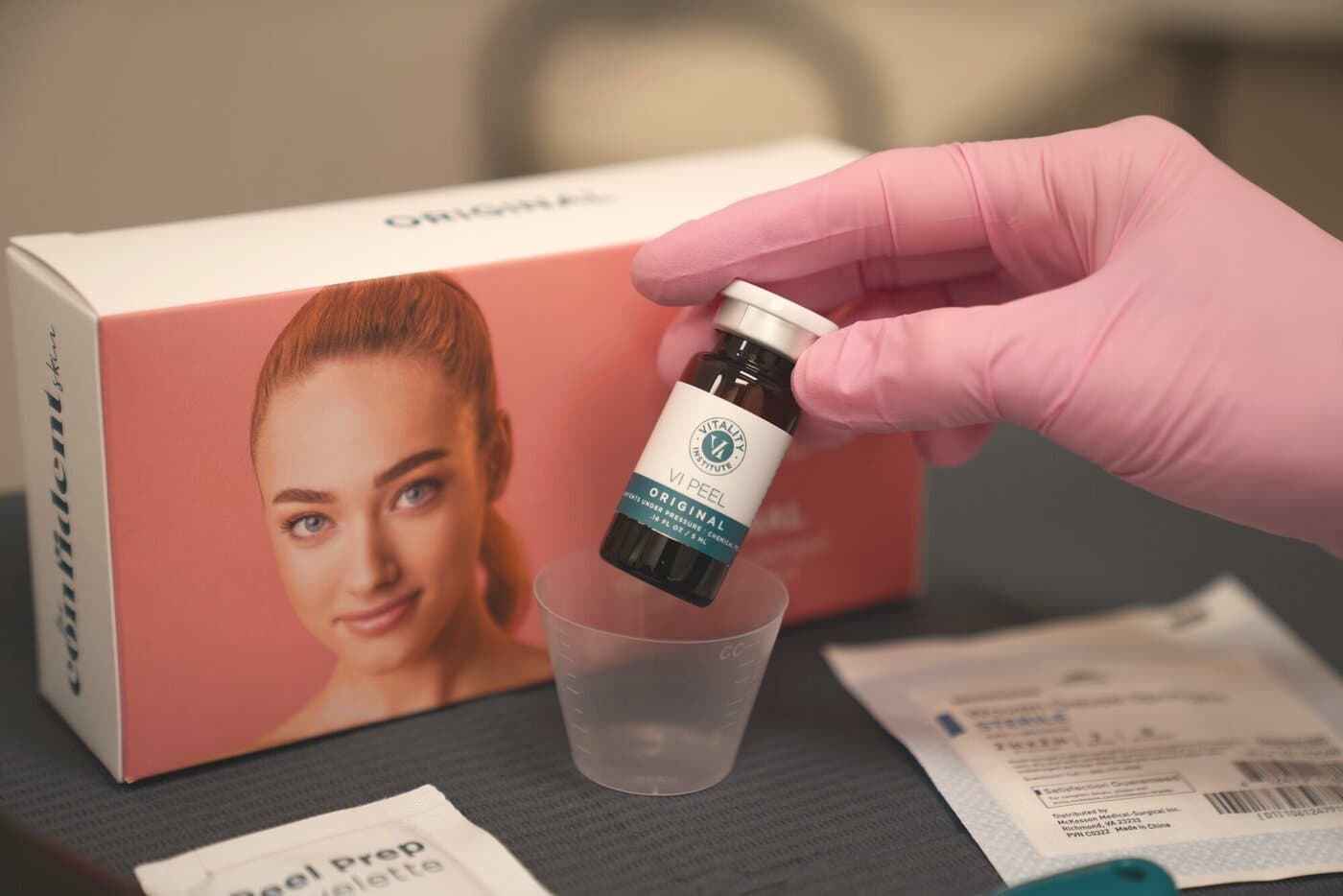
Yes, and it is worth saying plainly: a peel peels, and once it starts it is neither optional nor negotiable. Peeling generally begins around day three and continues for three to four days after that, and we ask you to keep out of direct sun for the first week.
The American Academy of Dermatology puts healing at one to seven days for a light peel and seven to fourteen for a medium one. None of that is something going wrong. It is what the treatment is, which is why the calendar question matters more than the courage question.
So the practical filter is simple: what do the next two weeks look like? Two weeks out from an event is comfortable. Three days out is not. If the peeling window has nowhere to land, the answer is not to squeeze it in; it is to book the facial now and place the peel where it fits.
How do you choose between them?
Start with the calendar, because it decides more than anything else, and it is the part people most often get backwards. After that, it is a conversation about what you are seeing in the mirror and what you want done about it. That conversation belongs at a consultation rather than in an article, because the right answer depends on the skin in front of us.
| Aspect | Facial | Peel |
|---|---|---|
| The visit | Cleansing, exfoliation, mask, hydration, massage | A professional exfoliating treatment, matched to your skin on the day |
| The days after | No shedding phase to wait out | Peeling from around day three, for three to four days |
| Sun | Keep up your usual daily sunscreen | Out of direct sun for the first week |
| Close to an event | Sits well, even in the last week | Two weeks out is comfortable. Three days out is not. |
What if the real concern is sun spots?
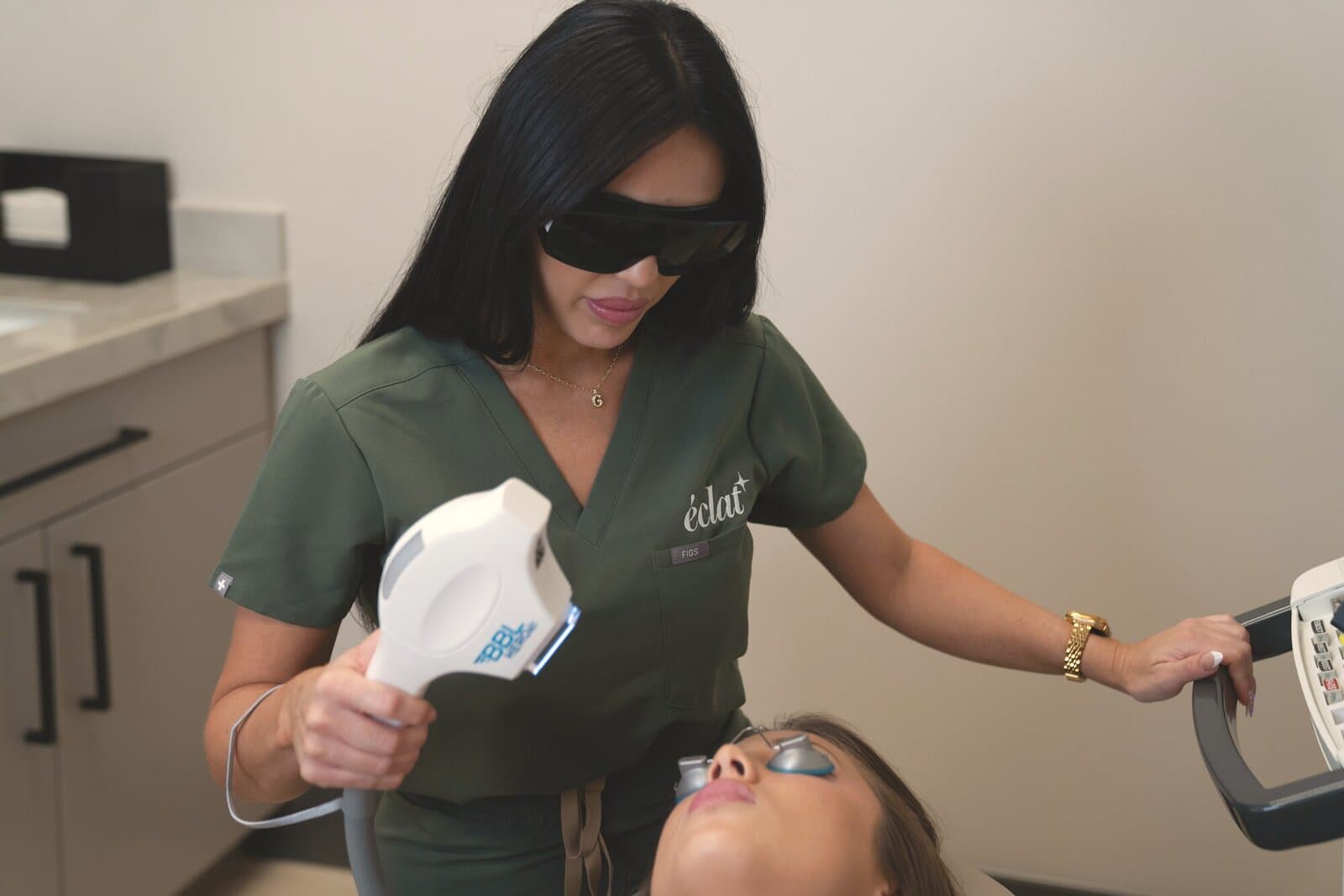
Sometimes the facial-or-peel question is standing in for a different one. If what you keep noticing in the mirror is sun spots, the conversation that follows is often about neither. It is about BBL, the BroadBand Light platform on our menu: a wide band of light, filtered down to the range being treated.
A BBL visit runs on its own calendar. Expect pigmented spots to darken first, then fade and flake away over the following days, and we ask that treated skin stay out of direct sun for fourteen days afterwards. Sun spots become briefly more visible before they fade, which is worth knowing before a big week.
We are not making that choice for you here; we are saying the fork exists. Bring us the mirror question rather than a treatment name, and we will tell you plainly which side of the menu it belongs to.
Do facials and peels work together?
They are not competitors. One maintains and one changes, and a year of well-tended skin often has room for both. What order, what spacing, which peel and at what depth: those are questions we answer at a consultation and deliberately not in an article, because the honest answer is different for every face that asks.
Questions
Frequently asked questions
Can I get a facial two days before an event?
Usually yes. It is one of the few things that suits that spot, because a facial has no peeling phase to wait out. Tell us the date when you book, though: some steps belong in an earlier visit, and we would rather plan around that than surprise you.
How long does the peeling last after a chemical peel?
Peeling generally begins around day three and continues for three to four days after that. The American Academy of Dermatology puts overall healing at one to seven days for a light peel and seven to fourteen for a medium one, which is why we suggest giving a peel two weeks of room.
Do I have to stay out of the sun after a peel?
For the first week, yes: we ask you to keep out of direct sun while the skin does its work. In Phoenix that is worth planning around rather than hoping around, so tell us what the week after your appointment looks like and we will help you place the visit well.
Is a back facial the same thing as a facial?
Same care, different canvas. A back facial is cleansing, exfoliation and gentle extractions where needed, then a customized mask and deep hydration, for the skin you cannot reach yourself. And it follows the same logic as everything above: no shedding phase, so it sits comfortably close to an event.
What if I do not know which one I need?
Then you are exactly who consultations are for. Come in, tell us what you see in the mirror and what the next month holds, and we will lay out the options plainly, including the gentlest one. The consultation is free, and no pressure is the house rule. Come for the consultation, decide on treatment after. You don't have to book one on the spot.
Are peels only for fall and winter?
No. The instruction that matters is a week out of direct sun afterwards, and that can be kept in any month, though it takes more intention in a Phoenix summer. If your calendar makes winter easier, that is real. The season is a convenience here, not a rule.
Sources
- VI Derm, VI Peel FAQ — the peeling-window timeline in the peel section. vipeel.com/pages/vi-peel-faq (opens in a new tab) · Retrieved August 14, 2026
- American Academy of Dermatology, Chemical peels: FAQs — the AAD healing ranges in the peel section. aad.org/public/cosmetic/younger-looking/chemical-peels-faqs (opens in a new tab) · Retrieved August 14, 2026
- Sciton, BBL Patient Pre & Post-Care Instructions (2600-023-12 Rev A). sciton.com/postCareFlyers/2600-023-12_BBL_Patient_PostCare.pdf (opens in a new tab) · Retrieved August 14, 2026
- Sciton, BBL® HEROic™ treatment page. sciton.com/treatment/bbl-heroic/ (opens in a new tab) · Retrieved August 14, 2026
General information, not medical advice — for your own skin and your own plans, that is what a consultation is for. Our Terms of Service put it in full.
Want more of these in your Google results? Add éclat as a preferred source (opens in a new tab).